

Last Updated: November 14, 2026
Quick Summary
The key to how to care for coastal lifestyle clothing is rinsing off salt and sand soon after wearing, washing in cold water with mild detergent, and drying out of direct sun. These steps prevent salt from stiffening fibers, sand from wearing them down, and sunlight from fading color.
- Rinse salt and sand off soon after wearing, since salt crystals stiffen threads and sand wears down fibers.
- Wash fishing shirts inside out on a gentle cycle in cold water with a small amount of mild detergent.
- Skip fabric softener on performance fabrics because it can coat fibers and reduce moisture-wicking.
- Rinse fresh salt in cold water without scrubbing, since scrubbing drives crystals deeper into the weave.
- Never put a salted garment in the dryer or in direct sun, because heat permanently sets salt stains.
Table of Contents
- Why Salt, Sand and Sun Wear Out Coastal Clothing
- How to Wash Fishing Shirts and Performance Fabrics
- How to Remove Salt Stains from Clothes
- How to Prevent Clothes from Fading in the Sun
- Drying Coastal Clothing Without Shrinking or Stiffening It
- How to Store Beach Clothes Between Trips
- Troubleshooting Common Coastal Fabric Problems and Your Next Wash Routine
- Frequently Asked Questions
Why Salt, Sand and Sun Wear Out Coastal Clothing
Coastal clothing takes a beating that most closet staples never see. Salt water dries into fibers, sand works its way into seams, and hours of direct sun slowly break down dye. Knowing how to care for coastal lifestyle clothing can make the difference between a shirt that lasts one summer and one that lasts many.

Salt is the first enemy. As seawater evaporates on fabric, it leaves crystals behind that stiffen threads and pull moisture away from the material. Sand acts like sandpaper, wearing down fibers every time you move. Sun then bleaches color, especially on darker garments.
The good news is that these problems are predictable. A simple routine handles most of them:
- Rinse salt and sand off soon after wearing
- Wash in cold water with a mild detergent
- Dry out of direct sun
- Store clothes clean and dry
Start with these basics of how to care for coastal lifestyle clothing before trying anything advanced.
How to Wash Fishing Shirts and Performance Fabrics
Fishing shirts are built to handle sweat, sun and saltwater, but they still need proper care. Washing them the wrong way can fade colors and weaken the fabric over time.

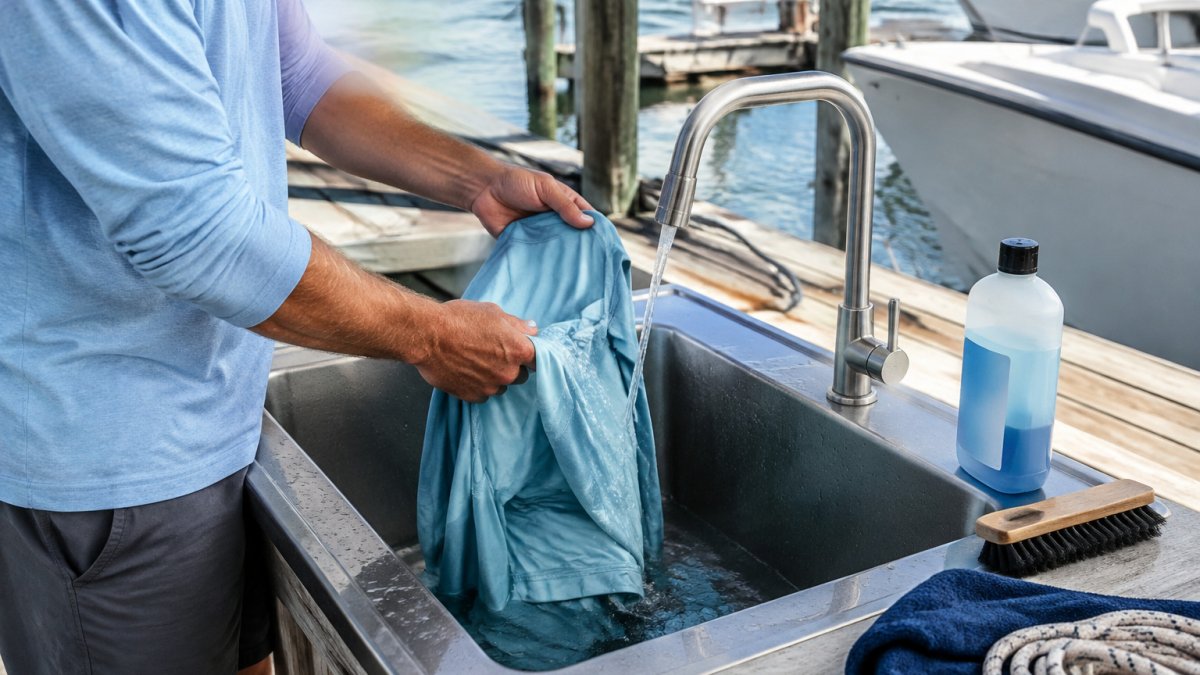
Follow these steps for a clean, long-lasting wash:
- Rinse the shirt in cold water right after a trip.
- Turn the garment inside out to protect the printed or colored surface.
- Wash on a gentle or delicate cycle with cold water.
- Use a small amount of mild detergent. Heavy detergent can leave a residue that traps odor.
- Skip fabric softener. It can coat performance fibers and reduce moisture-wicking.
Cold Water Wash Settings and Mild Detergent
Cold water is a gentle choice for coastal clothing. It is less likely to fade dye or shrink fibers than hot water, and it helps rinse away salt without setting it into the fabric.
Pick a detergent labeled mild or free of dyes and perfumes. These formulas rinse out cleanly and are less likely to damage synthetic fibers.
Caring for Cotton, Blends and Moisture-Wicking Fabrics
Each fabric type reacts differently. Cotton is soft and breathable but can stretch or fade if handled roughly. Blends combine the comfort of cotton with the durability of synthetic fibers. Moisture-wicking fabrics pull sweat away from the skin and dry quickly, but they can hold onto odor if they are not washed regularly.
For cotton and blends, wash inside out in cold water and air dry. For moisture-wicking gear, rinse after every outing and wash soon after use to prevent odor from setting in.
How to Remove Salt Stains from Clothes
Salt stains are not dirt. They are crystallized minerals left behind when seawater evaporates, and they behave differently on different fabrics. On cotton and linen, the crystals sit on the surface and rinse away easily. On synthetic performance fabrics, salt can work into the weave and stiffen the hand of the fabric until it feels like cardboard. On dark garments, the white chalky ring is the most visible, but the damage to fiber flexibility happens even when you cannot see it.
The fix depends on how long the salt has been sitting.
Fresh salt (same day): Rinse the garment in cold water until the water runs clear. Do not scrub. Scrubbing drives crystals deeper into the weave. Hang to dry in the shade.
Set salt (a day or more): Soak the garment in cold water for 30 minutes, then work a small amount of mild detergent into the stained area with your fingers. Wash on a gentle cycle in cold water. Check the stain before drying. If the ring remains, repeat the soak once more.
Salt on hardware-adjacent seams: Salt collects in the stitching around zippers, snaps, and grommets and is the first place corrosion starts. Rinse those areas specifically, not just the body of the garment.
Watch out: heat sets salt stains permanently. Never put a salted garment in the dryer or hang it in direct sun until the stain is fully gone, because the crystals will bake into the fiber and the ring becomes much harder to lift.
For stubborn rings on white or light-colored cotton, a paste of baking soda and cold water applied before washing can help loosen residue. On dark garments, a second cold soak is a gentler option.
Cold water is generally the better choice for salt stains, since hot water can set residue into the fiber.
The article's salt stain guidance depends on how long the salt has been sitting, so the table below summarises the recommended fix for each case.
| Situation | Recommended fix | Key caution |
|---|---|---|
| Fresh salt (same day) | Rinse in cold water until clear | Do not scrub |
| Set salt (a day or more) | Cold soak 30 minutes, then gentle cold wash | Check stain before drying |
| Salt in seams and hardware | Rinse those areas specifically | Salt starts corrosion here |
| Stubborn ring on light cotton | Baking soda and cold water paste before washing | Use cold water, not hot |
| Stubborn ring on dark garments | Second cold soak | Repeat soak if ring remains |
| Any salted garment | Keep out of dryer and direct sun until gone | Heat sets salt permanently |
How to Prevent Clothes from Fading in the Sun
Sun is one of the biggest threats to coastal clothing. Over time, UV light breaks down dye and makes colors look washed out.
Simple habits help a lot:
- Dry clothes in the shade rather than in direct sun
- Turn dark garments inside out before hanging them
- Store clothes out of bright windows
- Avoid leaving wet clothes in the sun for long periods
Check labels when you shop, since fabric construction affects how well color holds up.
Drying Coastal Clothing Without Shrinking or Stiffening It
Heat is the main cause of shrinking and stiffness. The safest method is air drying.
Hang shirts on a hanger or lay them flat on a towel in a shaded spot with good airflow. Reshape the garment while it is still damp so it dries in the right form.
If you must use a dryer, choose the lowest heat setting or a tumble dry low option. Remove items while they are still slightly damp to avoid over-drying. Keep in mind that high heat can weaken elastic and synthetic fibers over time.
How to Store Beach Clothes Between Trips
Storage is where most coastal clothing quietly degrades. A garment that was washed and dried correctly can still come out of the closet next season with stiff zippers, cloudy snaps, and a musty smell if it was stored wrong.
The first rule is that nothing goes into storage damp. Even a slight residual moisture in a folded shirt becomes mildew over weeks. Dry every item completely, then let it sit at room air for an hour before folding, because fabric that feels dry to the touch can still hold moisture in thick seams and waistbands.
Hardware is the part most people ignore. Zippers, snaps, grommets, and drawcord eyelets are usually made of metal or coated metal, and salt air is corrosive to both. Before storage, wipe every metal piece with a barely damp cloth, dry it thoroughly, and apply a thin film of paraffin wax or a silicone-based lubricant to zipper teeth. Work the zipper up and down a few times to distribute it. This helps keep metal parts from corroding and sticking between seasons.
Fabric storage:
- Use breathable cotton garment bags or pillowcases rather than sealed plastic bins. Plastic traps residual moisture and creates a microclimate for mildew.
- Store in a cool, dry closet.
- Keep garments out of direct sunlight. UV exposure through a window fades dye even during storage.
- Avoid wire hangers for knits and performance fabrics. Fold them flat or use wide, padded hangers to prevent shoulder distortion.
Cedar and pest control: Cedar blocks or sachets are a common storage addition, but they do not replace cleaning. Moths are attracted to body oils and sweat residue, so a clean garment is the real defense. Refresh cedar periodically by lightly sanding the surface.
Long-term off-season storage: If a garment will sit for months, wash it, dry it fully, treat the hardware, and store it flat in a breathable bag. Avoid starching before storage, since starch can attract pests. Check stored items once mid-season for moisture or pest activity.
Watch out: storing a garment with sunscreen, sweat, or salt residue still on it invites both corrosion and odor. The wash step is not optional before storage, even if the item looks clean.
Troubleshooting Common Coastal Fabric Problems and Your Next Wash Routine
Even with good care, problems come up. Here is how to handle the most common ones:
- Odor that won't go away: Soak in cold water, then wash normally.
- Stiff fabric from salt: Rinse thoroughly in cold water and wash again without fabric softener.
- Faded color: Limit sun exposure and wash inside out in cold water.
- Pilling or thinning: Reduce friction by washing gently and avoiding harsh drying.
Once you have a routine that works, stick with it. Rinse after every trip, wash in cold water, air dry in the shade and store clean. A few minutes of care after each outing will keep your coastal wardrobe looking good for seasons to come.
Stay Sungry for your next adventure. Shop SUNGRY's full collection of beach shirts, fishing tees and lake-inspired apparel built for sun, sand and water. Explore the Open Sands Unisex Hoodie 7 Colors and the Sungry Unisex Long Sleeve 6 Colors to start your next wash-and-wear wardrobe.
Frequently Asked Questions
Can you put fishing shirts in the dryer?
You can, but low heat is the safer choice for most coastal clothing. High heat can shrink cotton and wear down fabric over time. For performance fabrics, a tumble dry low setting or air drying in the shade is generally gentler. Hanging shirts out of direct sun also helps colors hold longer and keeps synthetic fibers from stiffening.
Should you wash beach clothes after every wear?
Wash them after every wear if they picked up saltwater, sand or sunscreen, because those residues break down fabric over time. A shirt worn for a short walk on the beach can often be rinsed in cold water and air dried instead of run through a full cycle. Letting salt sit in fabric for days makes stains harder to remove and can leave the material feeling rough.
How do you keep coastal clothing from fading in the sun?
Turn garment-dyed shirts inside out before washing, use cold water and a mild detergent, and avoid bleach or harsh brighteners. When drying, keep clothes out of direct sun for long stretches, since UV exposure is one of the main causes of color loss. Storing pieces folded away from windows between trips is also a sensible habit.
What is the best way to wash coastal lifestyle clothing?
Rinse salt and sand out first, then wash in cold water on a gentle or delicate cycle with a mild detergent. Skip fabric softeners, which can coat performance fabrics and reduce breathability. Check the care label, avoid overloading the machine, and air dry when possible to protect fabric integrity and color across repeated washes.
