

Quick Summary
Good fishing gear fit means equipment and clothing that suit your body, your water and how you actually fish. Check that your rod, reel and line balance and work together, and that clothing lets you cast and move freely.
- Match rod length to your water: 6 foot 6 inch to 7 foot for most freshwater and light inshore fishing.
- Choose medium power for mixed water, since it covers roughly 1/4 to 5/8 ounce lures.
- Rest the rod on one finger near the reel seat to check balance before buying.
- Confirm the lure weight and line weight fall inside the rod's and reel's printed ratings.
- Raise both arms overhead and mimic a full cast to check that a fishing shirt does not pull tight.
Table of Contents
- Fishing Equipment List for Beginners
- How to Choose a Fishing Rod for Beginners
- How to Choose a Fishing Rod for Saltwater
- Fishing Shirt Fit: Comfort, Movement and Sun Coverage
- How to Test Gear Before You Buy and Match It to Your Setup
- Booking Your Next Gear Upgrade and Checking Your Fit
- Frequently Asked Questions
What Good Fit Means for Fishing Gear
Choosing fishing gear that fits well is about more than size on a tag. It means the equipment and clothing suit your body, your fishing environment and the way you actually fish. Gear that fits well stays comfortable for hours, moves with you, and works with the rest of your setup. Gear that doesn't fit becomes a distraction, and it can cost you fish.
Fit matters on two levels. The first is physical: how a shirt sits across your shoulders, how a rod feels in your hand, how a reel balances on the rod. The second is functional: whether your rod, reel, line and tackle work together to cast, hook and land fish. Both levels deserve attention before you spend a dollar.
Many anglers buy gear based on price or appearance and only discover poor fit once they are on the water. A rod that feels too heavy by the third hour, or a shirt that rides up when you reach for a line, rarely gets replaced quickly. Taking time to check fit first saves money and frustration.
Fishing Equipment List for Beginners
A starter setup does not need to be large. Most beginners do well with a short, practical list that covers the basics:
- A rod and reel combo matched to the water you fish most often
- Fishing line suited to the target species and your reel's spool capacity
- Terminal tackle, including hooks, sinkers, swivels and a bobber or float
- A tackle box or bag to keep everything organized
- Sun-protective clothing, such as a long-sleeve fishing shirt
- Pliers and a line cutter for removing hooks and trimming line
Start with a combo that is easy to use and matches your local fishing. Add specialized items once you know which species and techniques interest you most.
The starter list below covers the basics a beginner needs, with what each item is for.
| Item | Purpose | Note |
|---|---|---|
| Rod and reel combo | Casting and retrieving | Match to your most common water |
| Fishing line | Connects you to the fish | Suited to species and spool capacity |
| Terminal tackle | Hooks, sinkers, swivels, bobber | Keeps rig working |
| Tackle box or bag | Organizes gear | Keeps everything in one place |
| Sun-protective clothing | Covers skin from sun | Long-sleeve shirt works well |
| Pliers and line cutter | Removes hooks, trims line | Basic tools for every trip |
How to Choose a Fishing Rod for Beginners
A rod is the single most important choice in a beginner setup because it controls casting, feel, and hook-setting. Three measurements drive the decision: length, power, and action. Get those right and most beginner mistakes disappear.
Length sets casting distance and control. Longer rods cast farther and cushion larger fish; shorter rods are more accurate and easier to swing in tight cover.
Power describes how much force it takes to bend the rod, and it maps to lure weight and fish size. Ultralight and light power handle panfish, trout, and small lures in the 1/16- to 1/4-ounce range.
Action describes where the rod bends. Fast action bends near the tip, giving quick hook sets and better sensitivity. Moderate action bends farther down the blank, which is more forgiving on hook sets and keeps treble-hooked lures pinned.
A reliable starting point is a 6-foot-6-inch to 7-foot, medium-power, fast- or moderate-fast-action spinning rod rated for the lure weights you actually plan to throw.
Match the rod to the water you fish most. A medium spinning rod covers ponds, lakes, and slow rivers for bass, panfish, and trout. If you fish mostly small streams, a shorter light rod casts small spinners and bait more accurately.
Check the rod's printed lure-weight and line-weight ratings before you buy. Those two numbers tell you what the rod is designed to do, and staying inside them protects the blank and improves casting.
Watch out: a rod labeled "medium" by one brand can fish closer to another brand's medium-heavy, so compare the printed lure and line ratings rather than the label alone.
How to Choose a Fishing Rod for Saltwater
Saltwater fishing puts more stress on gear. Salt corrodes metal, fish are often larger and stronger, and sun and wind are constant. For saltwater, look for rods and reels with corrosion-resistant components and a power rating that can handle bigger fish.
Rod length and casting distance
In saltwater, longer rods help you cast farther from shore or from a boat, which matters when fish are feeding beyond the surf. A rod in the 7 to 8 foot range is a common choice for surf and pier fishing. In a boat or tight spaces, a shorter rod gives more control.
Rod power and action
Saltwater rods typically run medium-heavy to heavy power to handle larger species. A fast action helps set the hook quickly on fish that strike hard. Check that the reel seat and guides are rated for saltwater use, since cheaper components can corrode quickly.
Fishing Shirt Fit: Comfort, Movement and Sun Coverage
Clothing is part of gear fit too. A fishing shirt should keep you cool, protect your skin from sun, and let you move freely when casting, reeling and lifting fish. A long-sleeve shirt with a relaxed cut gives full arm coverage without restricting your shoulders.
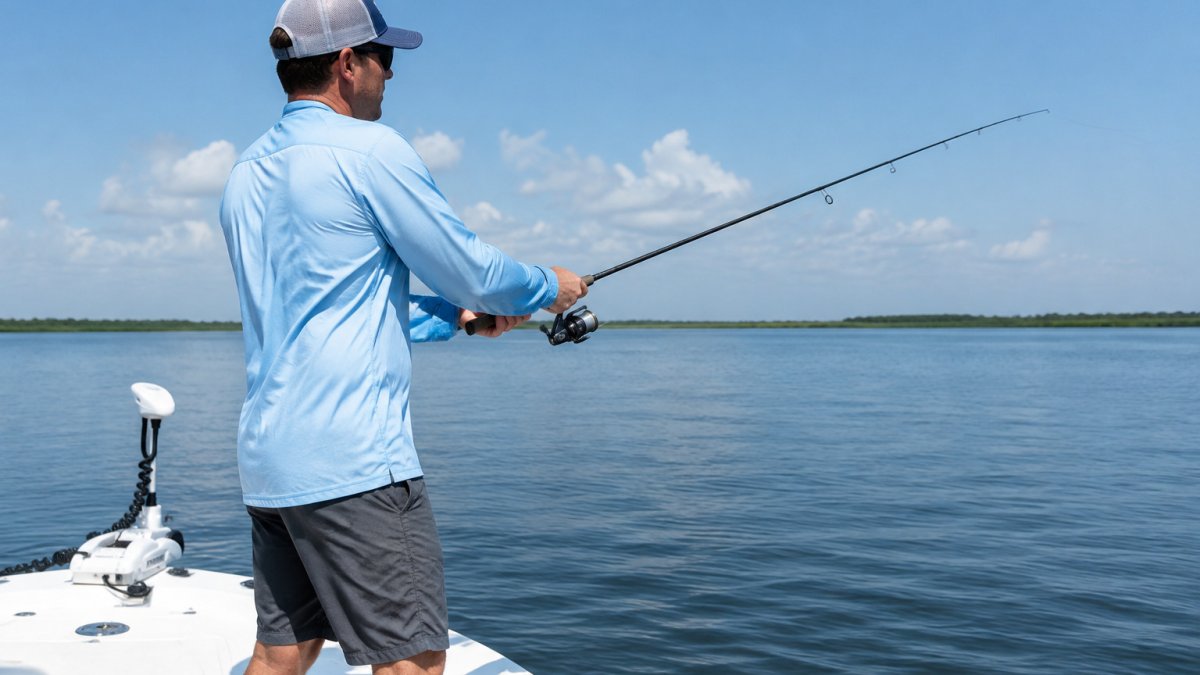
Check the shoulders and sleeves first. You should be able to raise an arm overhead and make a full casting motion without the fabric pulling tight. Length matters as well: the shirt should cover your waistband so it stays put when you bend or reach.
Fabric weight and breathability affect comfort on hot days. Sun coverage is worth prioritizing on long days, since reflected light off water increases exposure.
Fit is also personal. Compare the size chart against your chest, length and shoulder measurements rather than relying on your usual size alone. Brands cut differently, and fabric shrinkage can change fit after washing.
How to Test Gear Before You Buy and Match It to Your Setup
Most buying advice stops at picking a rod or listing gear. The step that actually determines whether you enjoy fishing is checking that the rod, reel, line, and lure work together as one balanced, comfortable system.
Test the balance point. Assemble the rod and reel, then rest the rod on one finger just ahead of the reel seat. A well-matched setup balances near that point.
Test the grip and reach. Hold the rod as you would fish it, with your dominant hand on the reel stem and your other hand on the foregrip.
Test the reel operation. Crank the handle and feel for smoothness and any grinding. Open and close the bail, check that the drag knob turns freely, and confirm the anti-reverse holds.
Test the cast. If the store allows it, tie on a practice weight near the middle of the rod's lure rating and make a few short casts in an open space. The rod should load and recover without feeling mushy or stiff.
Match the system with numbers, not guesses. Use the printed ratings to confirm compatibility:
- The lure weight you plan to throw should fall inside the rod's rated lure range.
- The line weight should fall inside both the rod's and the reel's rated line range.
- The reel's line capacity should hold enough of your chosen line to reach the fish you target.
- The reel size should suit the rod: a 1000- to 2500-size spinning reel pairs with light and medium rods, while 3000- to 4000-size reels suit medium-heavy and heavier rods.
- The gear ratio should match the technique: a faster retrieve suits lures and covering water, a slower ratio gives more torque for heavy fish and deep cranking.
Check the clothing fit with movement, not just size. Put the shirt or hoodie on and raise both arms overhead, then mimic a full cast and a two-handed lift. The fabric should not pull tight across the shoulders or ride up past the waistband.
Use this checklist before you buy:
- The setup balances near the reel seat when rested on one finger
- Your fingers wrap the grip and your index finger reaches the line comfortably
- The reel cranks smoothly and the drag and anti-reverse work
- The rod's lure rating covers your planned lures
- The line weight is inside both the rod and reel ratings
- The reel size and gear ratio suit the rod and technique
- The rod length suits where you fish (shore, boat, or pier)
- Clothing allows a full overhead cast without pulling or riding up
- Saltwater gear has corrosion-resistant components if you fish salt
Buy from a retailer with a clear return policy so you can repeat the balance and cast tests at home. Keep packaging and tags until you are sure the fit works.
Watch out: a reel that feels fine on the shelf can still be too heavy for a light rod once spooled with line, so weigh the fully rigged setup in your hand before the return window closes.
Booking Your Next Gear Upgrade and Checking Your Fit
When you are ready to upgrade, start by reviewing what you already own. Note which items feel uncomfortable or underperform, and which fishing trips you plan next. That list shapes your priorities and keeps the budget focused.
Shop with your measurements and fishing plans in hand. Compare size charts, read rod specifications closely, and confirm compatibility between rod, reel and line. Before buying online, check the seller's return policy so you know how to handle a poor fit.
SUNGRY carries fishing-inspired apparel. Our Gon Fishin Unisex 6 Colors tee and Bait & Tackle Unisex Hoodie offer options for warm days and cooler mornings on the boat. Our Anglers Anonymous (Patriot) summer collection tee pairs a relaxed fit with bright summer colors. Check the size guide on each product page before you order.
Frequently Asked Questions
How should a fishing shirt fit?
A fishing shirt should sit close enough at the shoulders that the seams line up with your shoulder point, while leaving enough room in the chest and upper arms to reach, cast and reel without pulling. The hem should cover your waistband when your arms are raised. Because cotton shrinks, choose pre-shrunk fabric and check the size chart in inches rather than relying on your usual tag size. SUNGRY's Gon Fishin tee, for example, lists length, width and chest measurements for each size, so you can compare them against a shirt you already own.
How do you choose a fishing rod for beginners?
Start with a medium-power spinning rod in a length around 6 to 7 feet, which handles most freshwater species and is easy to cast. Match the rod to the fish you expect to catch rather than the biggest fish you hope for. Hold the rod in your hand before buying and make a few practice motions to check that the grip and weight feel comfortable over a long day. Pairing it with a reel of similar size keeps the setup balanced.
How do you choose a fishing rod for saltwater?
Saltwater rods need more backbone and corrosion-resistant components than freshwater rods. Look for a medium-heavy or heavy power rated for the size of fish you plan to target, a fast action for solid hooksets, and guides and reel seats that are marked for saltwater use. A longer rod of 7 feet or more helps with casting distance from shore or a boat. Rinse the setup with fresh water after every trip to protect the reel and hardware.
What fishing equipment does a beginner need?
A beginner setup usually includes a spinning rod and reel combo, a line matched to the rod's rated line weight, a small tackle box, a selection of hooks, sinkers, swivels and floats, and a pair of pliers for removing hooks. Buy a few items at a time and learn how each one performs before adding more. Quality matters most for the rod, reel and line, because those determine how well the rest of the gear works together.
