

Quick Summary
Coastal lifestyle clothing is a relaxed way of dressing built around breathable fabrics, easy silhouettes, and colors like navy, white, sand, and muted ocean blues. It works for inland residents because it fits everyday life, and layering adapts it to cooler and drier climates away from the shore.
- Coastal style centers on breathable fabrics, easy silhouettes, and a palette of navy, white, sand, and muted ocean blues.
- Inland climates often turn much colder in fall and winter than beach towns, so layering is essential.
- A practical inland capsule wardrobe includes roughly 14 to 16 core pieces that combine into many outfits.
- Track what you actually wear for two weeks to decide which pieces deserve duplicates.
- Cost per wear, not sticker price, shows which pieces are worth the money.
Table of Contents
- What Coastal Lifestyle Clothing Means Beyond Beachwear
- Adapting Coastal Style to Inland Climates
- Building a Practical Inland Capsule Wardrobe
- Casual Beach Shirts That Work Off the Sand
- Coastal Casual Attire for Work, School, and Everyday Dress Codes
- Fabric Care, Fit, and Choosing Coastal Clothing Brands
- Building Your Coastal Look Before Your Next Gulf Trip
- Frequently Asked Questions
What Coastal Lifestyle Clothing Means Beyond Beachwear
Coastal style is often mistaken for a swimsuit and a pair of flip-flops. In reality, it is a relaxed approach to dressing built around breathable fabrics, easy silhouettes, and colors pulled from the water and sand. For anyone who lives far from the shore, that approach still works well, and it fits a Tuesday at the office as easily as a Saturday on the lake.
Coastal lifestyle clothing covers everyday pieces that feel at home near water but are not limited to it. Think lightweight button-up shirts, soft long-sleeve tees, drawstring pants, and layers that handle a cool evening. The goal is comfort first, with a look that reads as easygoing rather than costume-like.
Two things define the style. The first is fabric. Cotton and linen breathe in heat, and blends that dry quickly help on humid days. The second is color. Navy, white, sand, and muted ocean blues form a palette that works together without much planning.
At SUNGRY, we design our shirts around that same idea: comfortable, relaxed pieces that carry the feeling of the water into daily life. The cuts are meant for movement, whether you are hauling gear to a boat or walking through a parking lot in July.
For inland residents, the appeal is practical. You do not need to live near the ocean to enjoy the look. You need a few pieces that are comfortable, versatile, and easy to layer.
Adapting Coastal Style to Inland Climates
Living inland changes how coastal clothing should be used. Lake towns and river valleys can be hot and humid in summer, but they often swing much colder in fall and winter than beach towns do. A breezy linen shirt that works on a Gulf afternoon may leave you underdressed on a cool October morning in the Midwest.
The fix is layering. Pair a lightweight tee with an unlined overshirt or a zip-up hoodie, and you have a setup that adjusts as the day warms or cools. This is the same logic coastal dressers use, just applied to a different thermometer.
Inland climates also tend to be drier in some regions and more humid in others. In dry heat, lighter cotton keeps you cooler. In humid conditions, blends that dry faster are often more comfortable against the skin. Check your local forecast before choosing fabric weight, not just the high temperature.
Watch out: a shirt that looks right at a coastal shop can look out of place at a lake dock in a cold snap if you do not add a layer.
Building a Practical Inland Capsule Wardrobe
A capsule wardrobe is a small set of pieces that mix well together. For inland coastal style, aim for roughly 12 to 16 core items you can rotate across all four seasons. The goal is not a uniform; it is a set of pieces where almost every top works with almost every bottom, so you spend less time deciding and more time wearing.
Here is a concrete starting list with quantities:
- Tees (4): Two neutral (white, navy) and two in sand or muted ocean blue. Short sleeve, relaxed fit.
- Long-sleeve tees (2): One neutral, one darker shade for cooler mornings and fall layering.
- Overshirt or button-up (1-2): Lightweight, unlined, worn open over a tee.
- Zip hoodie or fleece (1): For fall evenings and cold snaps.
- Packable rain shell (1): Handles spring and fall precipitation without bulk.
- Shorts (2): One casual, one slightly dressier for dinners out.
- Trousers (2): One relaxed chino or drawstring pant, one darker pair for work or evenings.
- Graphic tee (1-2): For weekends, lake days, and trips.
That is 14 to 16 pieces, and they combine into dozens of outfits. A neutral tee with shorts and an overshirt covers a warm Saturday. The same tee with trousers and the hoodie covers a cool office Friday. The long-sleeve tee under the overshirt with trousers handles a 50-degree morning that warms to 70 by afternoon.
To decide which pieces earn the most use, track what you actually wear for two weeks. Most people find that three or four tops and two bottoms account for the majority of outfits. Buy duplicates of those in different colors before adding new categories.
This is where a practical SUNGRY piece fits. Our Lake Lover Society (front) tee, available in 9 colors, pairs with the neutral basics above and gives you a lake-themed option for weekends on the water. For a more relaxed unisex fit, the Beach Bum Society tee comes in six colors and works for everyday wear as well as trips to the shore.
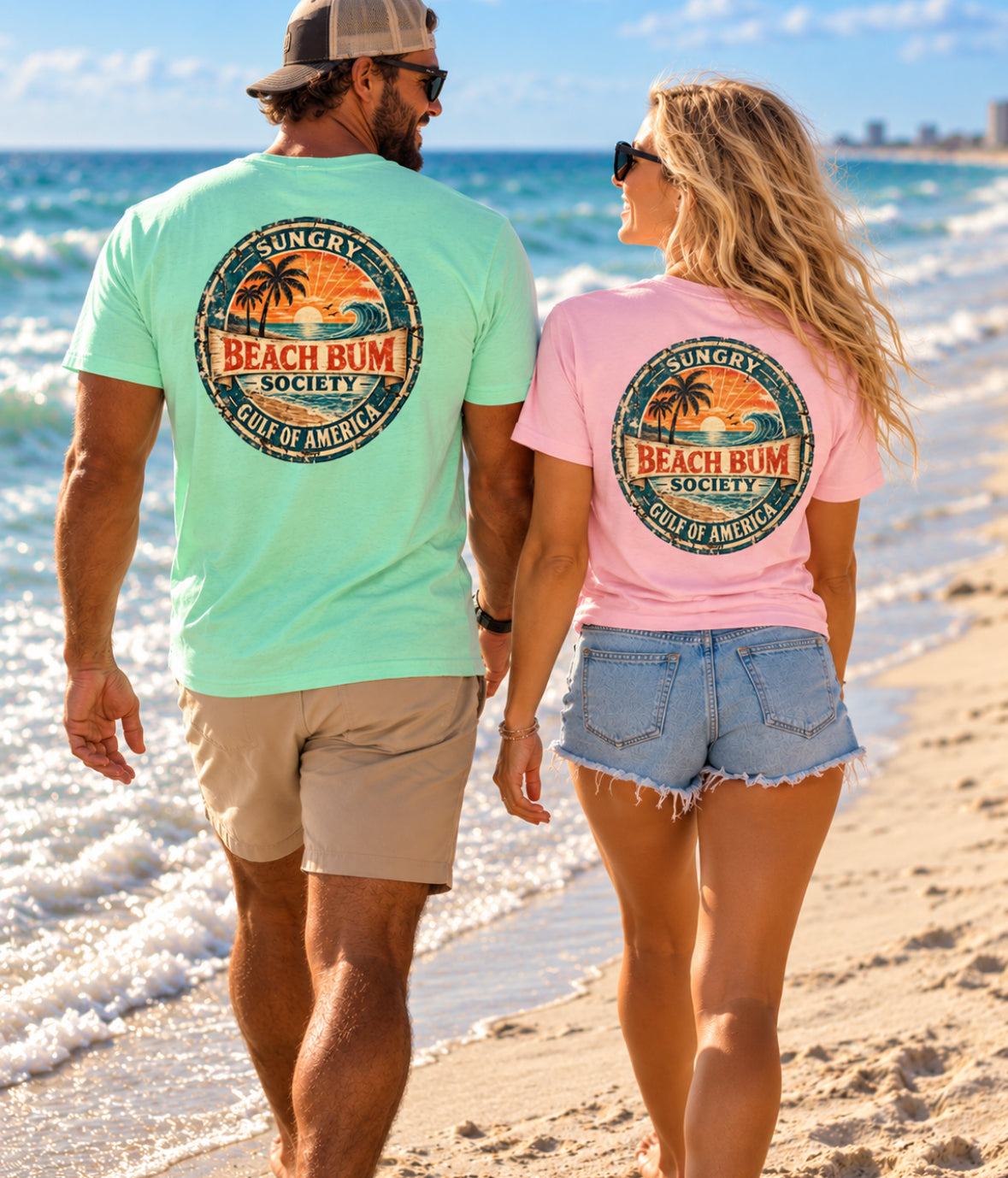
Watch out: a capsule built only for summer leaves you short in October. Make sure at least one long-sleeve layer and one pair of trousers are in the mix before you buy a fourth tee.
The article lists the core pieces of an inland capsule wardrobe and how many of each to buy, which can be summarised at a glance.
| Piece | Quantity | Use |
|---|---|---|
| Tees (short sleeve) | 4 | Two neutral, two sand or muted ocean blue |
| Long-sleeve tees | 2 | Cooler mornings and fall layering |
| Overshirt or button-up | 1-2 | Lightweight, worn open over a tee |
| Zip hoodie or fleece | 1 | Fall evenings and cold snaps |
| Packable rain shell | 1 | Spring and fall precipitation |
| Shorts | 2 | One casual, one dressier |
| Trousers | 2 | One relaxed, one darker |
| Graphic tee | 1-2 | Weekends, lake days, trips |
Quantity
Casual Beach Shirts That Work Off the Sand
Beach shirts often get stuck in the car or the cooler once the trip ends. They do not have to. The right tee moves easily from the dock to a casual dinner, a backyard cookout, or a hardware store run.
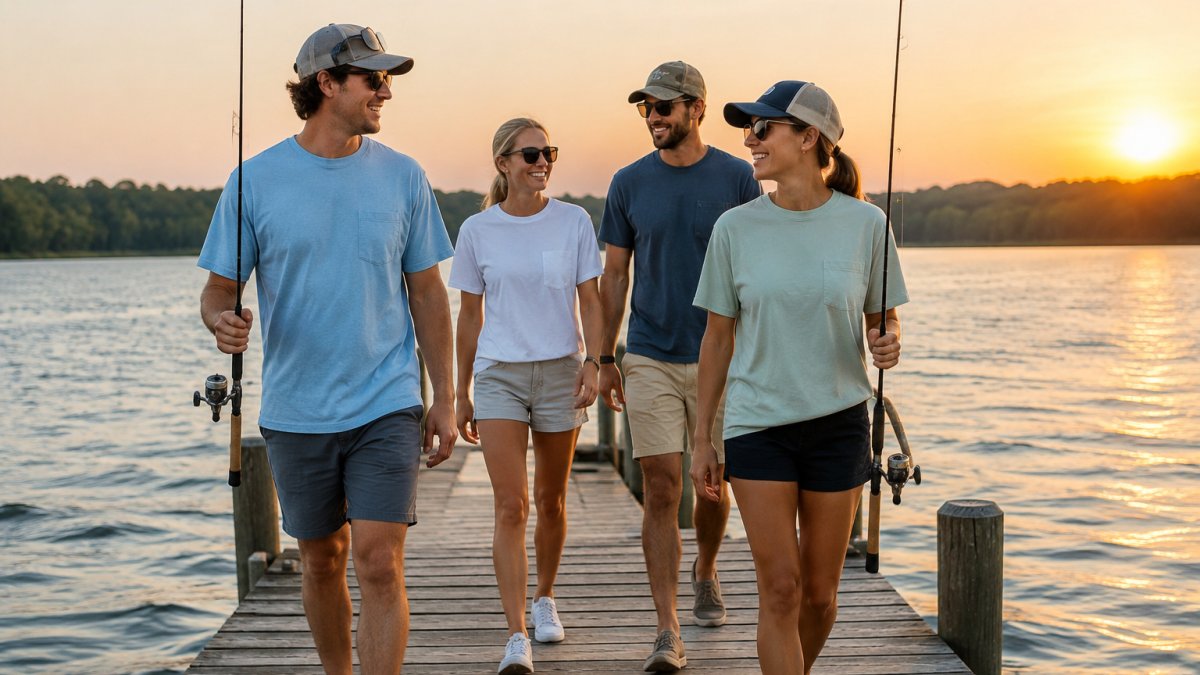
Choose shirts with a comfortable unisex cut and a fabric that stays soft after repeated washing. Shirts that look good wrinkled, with a relaxed fit, are the easiest to wear off the sand. Compare the Gulf-ready apparel picks to see which shirt styles hold up well.
Here are three quick checks before you buy:
- Fit: Look for a relaxed body that does not cling in humidity.
- Fabric: Cotton-rich blends can feel comfortable on warm days.
- Color: Neutral shades like white, navy, and sand mix with almost anything.
Our Saltwater Therapy front-print tee, $25.00 and available in seven colors, is designed for exactly this kind of everyday wear. Its heather colors are 50% cotton and 50% polyester, with a tubular fabric build and double-seamed sleeves and hem.
Coastal Casual Attire for Work, School, and Everyday Dress Codes
Many people want coastal style without breaking the dress code at work or school. The solution is to keep the color and fabric cues while adjusting the level of polish.
Business casual (most offices): Treat the tee as a base layer, not the outer layer. A crew-neck tee in navy or white under an unstructured overshirt or a lightweight button-up reads polished without a blazer. Pair with chinos or tailored trousers and clean leather sneakers or loafers.
Casual offices and remote work: A relaxed tee with drawstring trousers or dark shorts and a zip hoodie works for video calls and in-person days. Keep the palette to two or three colors per outfit so it looks intentional rather than thrown together.
School settings (students and staff): Solid neutrals and small graphics are usually safe; save bold front prints for weekends. A long-sleeve tee under a short-sleeve tee adds warmth without a jacket, which helps in buildings with uneven heating. Avoid sheer light-colored shirts unless you layer underneath.
Family events and social occasions: Swap shorts for trousers and add the overshirt. A sand or ocean-blue tee with navy trousers and a clean white sneaker reads relaxed but appropriate for a backyard party or a casual dinner.
Errands and travel: The same capsule pieces work. A neutral tee, shorts or trousers, and the packable shell cover a Saturday of errands and a weekend trip without a separate packing list.
A few rules that hold across settings:
- Stick to one graphic element per outfit.
- Pair relaxed shirts with structured bottoms to avoid looking sloppy.
- Keep footwear clean and simple; it does more for polish than any single garment.
- Match your fabric weight to the setting: lighter cotton for casual, slightly heavier blends for offices with cold air conditioning.
Watch out: a shirt that passes at a casual office can fail a business-casual policy if it has a large front print or a very relaxed fit. When in doubt, choose the solid version and add the graphic on weekends.
Fabric Care, Fit, and Choosing Coastal Clothing Brands
Coastal clothing sees a lot of sun, sweat, and salt air. Caring for it properly keeps the color and shape intact. Wash shirts inside out in cold water, avoid high-heat drying, and hang or lay flat to dry when possible. For a full guide to washing and maintaining coastal clothing, see how to care for coastal lifestyle clothing.
When comparing brands, read the fiber content, check whether the fabric is described as sheer or lightweight, and look at the size guide. Measurements in inches for length, width, and chest tell you more than a generic S, M, or L label. Be aware that some shirts are slightly sheer in lighter colors, so consider a layer underneath if that matters to you.
Compare price against how often you will wear the piece. A $25.00 tee that lasts several seasons can cost less per wear than a cheaper shirt that loses shape after a few washes.
Building Your Coastal Look Before Your Next Gulf Trip
Start with three pieces: one neutral tee, one overshirt or hoodie, and one pair of shorts or trousers. Wear them at home for a week to see how they fit your routine. Then add a graphic tee for the trip itself.
If you are heading to the Gulf, pack two lightweight tees, one long-sleeve layer for cooler evenings, and a pair of casual shorts. Bring the layer even if the forecast looks warm. Coastal evenings often turn breezy quickly.
When you return home, the same pieces work for lake weekends, backyard dinners, and errands around town. That is the real point of coastal lifestyle clothing for inland residents: a relaxed wardrobe that carries the spirit of the water wherever you live.
Shop the SUNGRY collection to find tees in neutral and themed colors that fit this approach.
Frequently Asked Questions
What is coastal casual attire?
Coastal casual attire is relaxed, breathable clothing built around soft cotton, linen blends and simple silhouettes. Think long-sleeve tees and lightweight button-ups. It is comfortable enough for a boat ride or a lakeside dinner, yet clean enough to wear to lunch or a casual office. The look borrows the nautical palette of the Gulf, but it works anywhere people spend time outdoors in warm weather.
How can you dress coastal when you live inland?
Start with the pieces that do not depend on salt air: a breathable graphic tee, lightweight shorts and a layering piece such as an overshirt. Use navy, white and ocean-inspired neutrals as your base colors. Add a straw tote or espadrilles for a finishing touch. Inland residents who visit the Gulf a few times a year can keep one or two coastal shirts in the wardrobe and wear them at home on lake days, backyard grilling or weekend errands.
Can coastal clothing be worn year-round?
Yes, with layering. Lightweight cotton and ring-spun tees work in summer, while a zip-up hoodie or a lightweight outer layer handles cooler mornings in fall and spring. Inland winters are colder than Gulf winters, so pair coastal pieces with a warmer base layer when temperatures drop. The silhouettes and colors stay the same, which makes the look easy to carry across seasons.
What are the best fabrics for comfortable coastal-style clothing?
Cotton and cotton-polyester blends are the most common choices for coastal shirts because they are breathable and wear well. Ring-spun cotton tends to feel softer and holds its shape after washing. Heather colors are 50% cotton and 50% polyester.
